Women in mining
Women in mining in Zimbabwe
Women are one in eight of the country's artisanal and small-scale miners, and hold fewer than one title in ten. The figures, the barriers behind them, and what is being done.
- Women in artisanal mining
- 10–15%of about 535,000
- Women's share of titles issued
- 9.4%2017
- Gold Development Fund loans
- 11%to women
- Across southern Africa
- 40–50%ministry estimate
Sources and years for every figure are given beside each chart. Zimbabwe's most recent official share is a 2025 ministry estimate; the title and loan figures date from 2017–19.
Zimbabwe's artisanal and small-scale mines employ about 535,000 people. The Ministry of Mines puts the women among them at 10–15% — somewhere between 53,000 and 80,000.1 Across southern Africa the same ministry quotes 40–50%, and worldwide the World Bank's figure is about 30%.1,5
That gap is the subject of this page: what the numbers actually say, where they come from, and what stands between women and a registered, working claim.
How many women, and how good are the figures?
Every Zimbabwean estimate lands in the same narrow band, and none of them is recent. The most-quoted figure, 11%, comes from a 2015 study whose fieldwork covered only Shurugwi and Kadoma, and which noted that earlier estimates had put women at more than a third.3 A 2019 Gender Commission review reported 10–15% of small-scale miners, and a register-based figure of 10% from 2012.2
The district picture is very different from the national one. In Mazowe and Penhalonga, reporting commissioned for the African Union's Move Africa project put women at close to half the workforce — a figure published without the data behind it.6 Nobody has measured how much of the country's mineral output women produce.4
Titles: the bottleneck
Working a claim and holding one are different things. When the Gender Commission looked at Ministry of Mines records, women held 119 of 1,262 mining titles issued in the first half of 2017 — 9.4% — and between 10% and 19% of small-scale mines in the three provinces it examined.2
A title is also the collateral a bank will lend against, which is why women's groups have pressed the point as the Mines and Minerals Amendment Bill (H.B. 1, 2025) goes through Parliament. In 2024 the Economic Justice for Women's Project told a stakeholder meeting that the Bill still defines a miner as a man, and warned it would carry forward women's limited access to land, resources and collateral-based loans.20 A gender impact assessment cited by the ministry in April 2026 made the same argument in official language: gender-neutral wording may leave women out on finance, land rights and mercury exposure.15
Source: Zimbabwe Gender Commission, February 2019
Show the numbers
| Measure | Women | Total | Share |
|---|---|---|---|
| Mining titles issued, national | 119 | 1,262 | 9.4% |
| Small-scale mines, Matabeleland North | 934 | 4,934 | 18.9% |
| Small-scale mines, Manicaland | 118 | 691 | 17.1% |
| Small-scale mines, Matabeleland South | 94 | 890 | 10.6% |
| Miners given ministry support | 103 | 833 | 12.4% |
Titles issued cover the first half of 2017, and 167 of those 1,262 titles — from Midlands and Masvingo — were recorded without the holder's sex. The provincial rows count mines already owned, and only three provinces were reported.
Money, and the loans that did not reach women
The clearest finance figure in the record is also the bluntest. Of about US$130 million lent through the Gold Development Fund by October 2018, women took 11% — about US$14.3 million — even though US$20 million had been set aside for them.2,4 Fidelity had received six applications from women between 2018 and 2020.4 In a household survey of 191 people in mining areas, 92.7% had never taken a loan of any kind.2
Allocation without capital or skills does not produce a mine. In March 2026 a senator told a mining meeting that more than 30 women's syndicates in Makaha, Mashonaland East, had been allocated blocks but lacked the knowledge and technical support to work them.17
Large-scale mining: 5% to 11%
The big operations report their own numbers, and they are low but improving. Zimplats reported 11% women in FY2024 against a 15% target; Mimosa 6%; Caledonia 5.1% across the group.9,8,7
The training pipeline is stronger than those figures suggest: 32% of the Zimbabwe School of Mines' 180 graduates in 2022 were women.13
Source: Zimplats FY2024, Mimosa 2025, Caledonia 2025
Show the numbers
| Company | Women | Workforce counted | Year |
|---|---|---|---|
| Zimplats | 11% | Employees (4,056 permanent, of an 8,857 total workforce) | FY2024 |
| Mimosa | 6% | 1,163 employees | Year to June 2025 |
| Caledonia | 5.1% (123 of 2,382) | Group, 98.5% Zimbabwean | 2025 |
The three count their workforces differently, so treat this as three separate figures rather than a league table.
Violence at the workings
The one quantified study we could find is a 2021 survey of 300 people in three Midlands mining districts. It found that 77% of the women working in the sector said they had experienced violence, with the highest figure, 84%, in Zvishavane, where about a hundred people were surveyed.10 Most respondents named more than one kind.
The Gender Commission's earlier survey found 51.3% of respondents saying women faced mining-related violence — a different question, on a different sample, so the two cannot be read as a trend.2 Both are several years old, and neither is a national count.
- Women in the sector reporting violence
- 77%
- People surveyed
- 300women and men
- Districts surveyed
- 3in the Midlands
Source: ALIGN / Tariro Youth Development Trust, July 2021
Show the numbers
| Kind of violence | Share of reported cases |
|---|---|
| Physical violence | 72% |
| Sexual abuse | 62% |
| Emotional abuse | 46% |
| Forced labour or exploitation | 33% |
| Economic abuse | 28% |
| Forced marriage | 25% |
| Maltreatment | 21% |
| Neglect | 9% |
| Women working in the sector who said they had experienced violence | 77% |
| — in Zvishavane | 84% |
| — in Shurugwi | 78% |
| — in Mberengwa | 68% |
The 77% is of the women working in the sector among the 300 people surveyed, not of all 300. The survey was spread across the three districts, so each district figure rests on about 100 people, and the report does not test the differences between them. It was taken after the Covid-19 lockdowns, which the same report says made matters worse.
Underground, and the beliefs that keep women above it
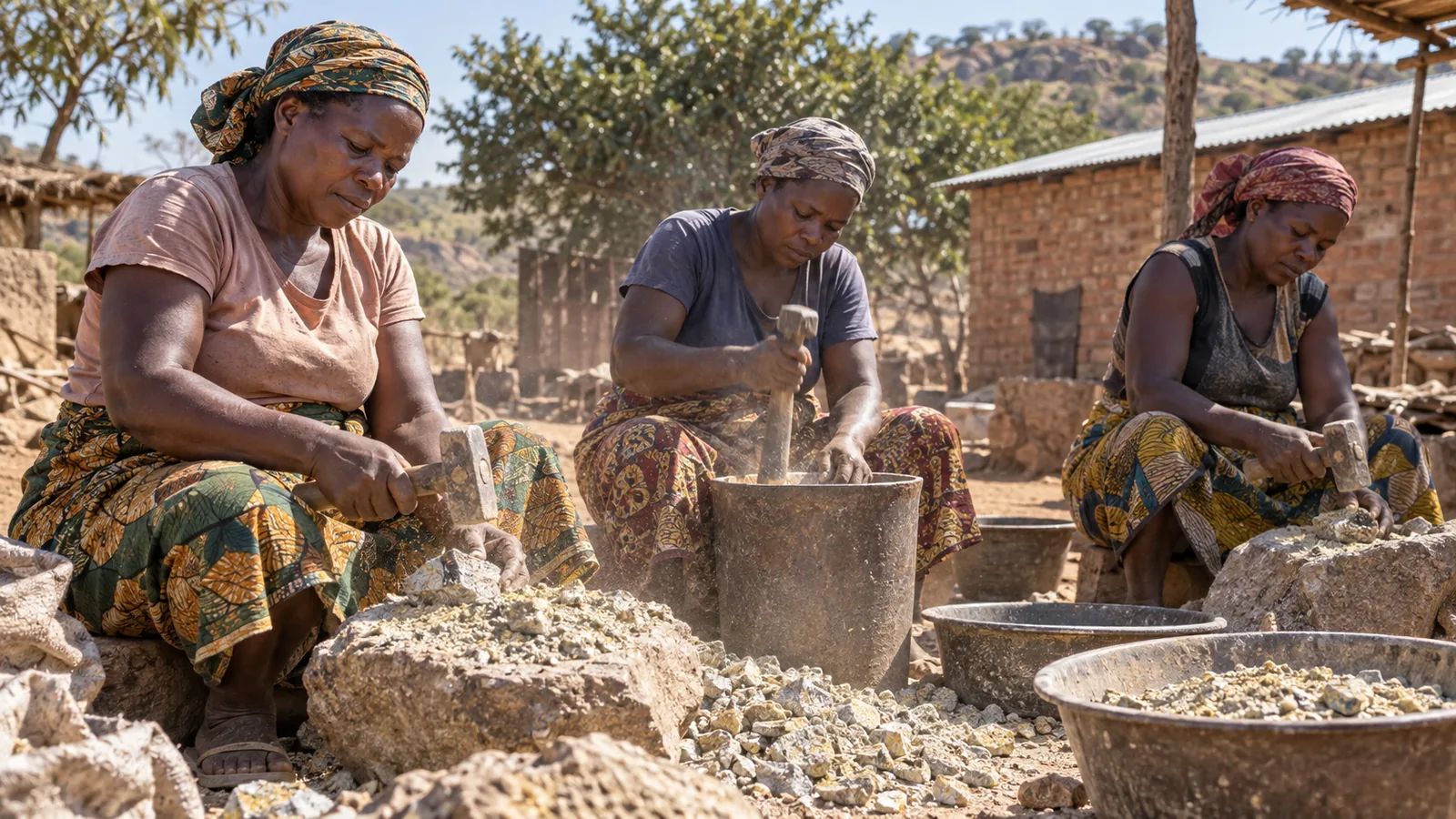
Women's work in artisanal gold is concentrated at the surface: crushing, washing, panning, sieving, sorting and amalgamating with mercury.4 Part of that is equipment and part of it is belief. Researchers who spent 13 months at Jumbo, in Mazowe, interviewing 60 people found a widely held conviction that the gold reef will vanish if a woman goes underground — and women building standing above ground instead, as keepers of shrines and as spirit mediums the miners consult.11
Surface work is not safer work. Amalgamation is where mercury exposure happens, often in a yard or kitchen, and planetGOLD puts mercury use at more than 96% of Zimbabwe's artisanal gold mine sites.12 Our health and safety page sets out what that does to the body.
Two days' work in one
Mining is rarely the only job. Zimbabwean women do about 49.7 hours of unpaid care work a week against men's 26.7.4 It shows up in how they mine: in the Gender Commission's survey, women were more likely to be at the workings occasionally than full time, and men the other way round.2
Mining areas are also where the schooling of girls comes under pressure. Nationally, 58% of the 26,704 secondary school pupils who dropped out in 2025 were girls, with money the reason given in 37% of cases and marriage or pregnancy behind thousands more. Reporting from Chegutu describes mining money drawing girls out of school there, though the national figures do not separate mining districts from the rest.14
- Women
- Men
- Unpaid care work, women
- 49.7hours a week
- Unpaid care work, men
- 26.7hours a week
Source: Zimbabwe Gender Commission, February 2019
Show the numbers
| Group | People | Share of all 191 surveyed |
|---|---|---|
| Women, full time | 33 | 17.3% |
| Women, now and then | 45 | 23.6% |
| Men, full time | 39 | 20.4% |
| Men, now and then | 8 | 4.2% |
The care-work hours are a national average for all women and men, not only miners, from the 2018 SADC Gender Protocol Barometer.
What is being done
The Ministry of Mines set up a department for gender, inclusion and wellness in September 2025, with finance, safety, decision-making and violence named in its remit.1 In March 2026 the deputy minister said the ministry had applied for an office in every district, to put training, formalisation help and dispute resolution within reach of women miners; at the same meeting officials asked the women's associations for their membership and production figures — which is part of why this page has so few recent numbers.16,17
Away from government, associations are doing the slow work: the Zvishavane Women's Mining Association has more than 200 members, a constitution and a bank account of its own, and 110 women artisanal miners were trained in Kadoma and Odzi, with 30 reached through a mobile legal aid clinic.18,19
- In placeA gender department inside the Ministry of MinesGender Mainstreaming, Inclusivity and Wellness · announced 17 September 2025
- In ParliamentThe Mines and Minerals Amendment Bill, and a gender impact assessmentThe assessment warns that gender-neutral wording may leave women out on finance, land and mercury · cited April 2026
- ProposedA mines office in every districtApplied for, to bring training, formalisation and dispute resolution closer to women miners · March 2026
- WorkingWomen's mining associationsZvishavane Women's Mining Association: 200+ members, a constitution and a bank account · 2022
- WorkingTraining and legal help110 women artisanal miners trained in Kadoma and Odzi; 30 reached by a mobile legal aid clinic · 2022
Source: Mining Zimbabwe, (Mines Bill), (district offices), IMPACT, WLSA
Show the numbers
| Status | What | When |
|---|---|---|
| In place | A gender department inside the Ministry of Mines | announced 17 September 2025 |
| In Parliament | The Mines and Minerals Amendment Bill, and a gender impact assessment | cited April 2026 |
| Proposed | A mines office in every district | March 2026 |
| Working | Women's mining associations | 2022 |
| Working | Training and legal help | 2022 |
What this means if you hold, buy or work ground
- Check who actually holds the title. Tribute and sponsorship arrangements, where a woman works ground registered to someone else, are common and are where disputes start. The document chain is in our guide to buying a claim.
- Register the syndicate properly. The associations that got somewhere did the dull things first: a constitution, a bank account, members on a list.18
- Budget for the skills, not only the ground. The Makaha syndicates had blocks and no way to work them.17
- Take mercury seriously in the processing yard, which is where most women work.12
- Have your say on the Bill. The Mines and Minerals Amendment Bill is still before Parliament, and public hearings are the point at which women's associations can put changes on the record.15,20
Guides: registering a claim · fees and licences · selling gold
Sources
- Mining Zimbabwe — Ministry of Mines sets up gender desk to promote inclusive mining policies (17 Sep 2025)
- Zimbabwe Gender Commission — Women in the Extractive Sector (February 2019)
- Pact Institute — A Golden Opportunity: scoping study of artisanal and small-scale gold mining in Zimbabwe (2015, fieldwork 2014)
- Zimbabwe Environmental Law Association — Barriers to women's full participation in ASGM in Zimbabwe (November 2020)
- World Bank / Delve — 2023 State of the artisanal and small-scale mining sector
- Daily Maverick — Empowered women transforming Zimbabwe's mining sector (1 Sep 2025; commissioned content for the African Union Commission)
- Caledonia Mining Corporation — ESG Report 2025
- Mimosa Mining Company — Sustainability Report 2025
- Zimplats — Integrated Annual Report FY2024
- ALIGN / Tariro Youth Development Trust — Gender-based violence and artisanal mining in Zimbabwe (July 2021)
- Jabulani Shaba and Sandra Swart, The Conversation — Rituals, rites and rumours: how women claim power in Zimbabwe's informal gold mines (4 Feb 2025)
- planetGOLD — Zimbabwe country programme
- Sunday News — More women graduate from mining school (9 Oct 2022)
- 263Chat — A childhood stolen: poverty, mining and girls out of school in Chegutu (3 Jun 2026), citing the Ministry of Primary and Secondary Education 2025 statistics report
- Mining Zimbabwe — Women in mining urged to seize opportunity as the new Mines Bill enters its parliamentary phase (14 Apr 2026)
- Mining Zimbabwe — Zimbabwe to deploy mining officers in every district to support women miners (19 Mar 2026)
- Mining Zimbabwe — Government urged to support women miners in Makaha (19 Mar 2026)
- IMPACT — Strengthened women's mining associations improve gender equality in the DRC, Uganda and Zimbabwe (December 2022)
- Women and Law in Southern Africa, Zimbabwe — Capacitating female artisanal miners (August 2022)
- NewZimbabwe — Lobby group slams Mines and Minerals Bill for sidelining women (27 Jul 2024)
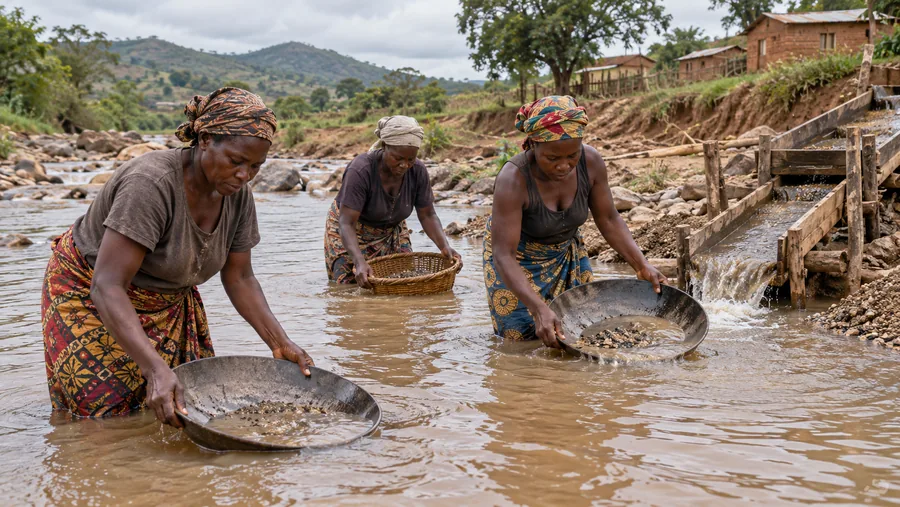
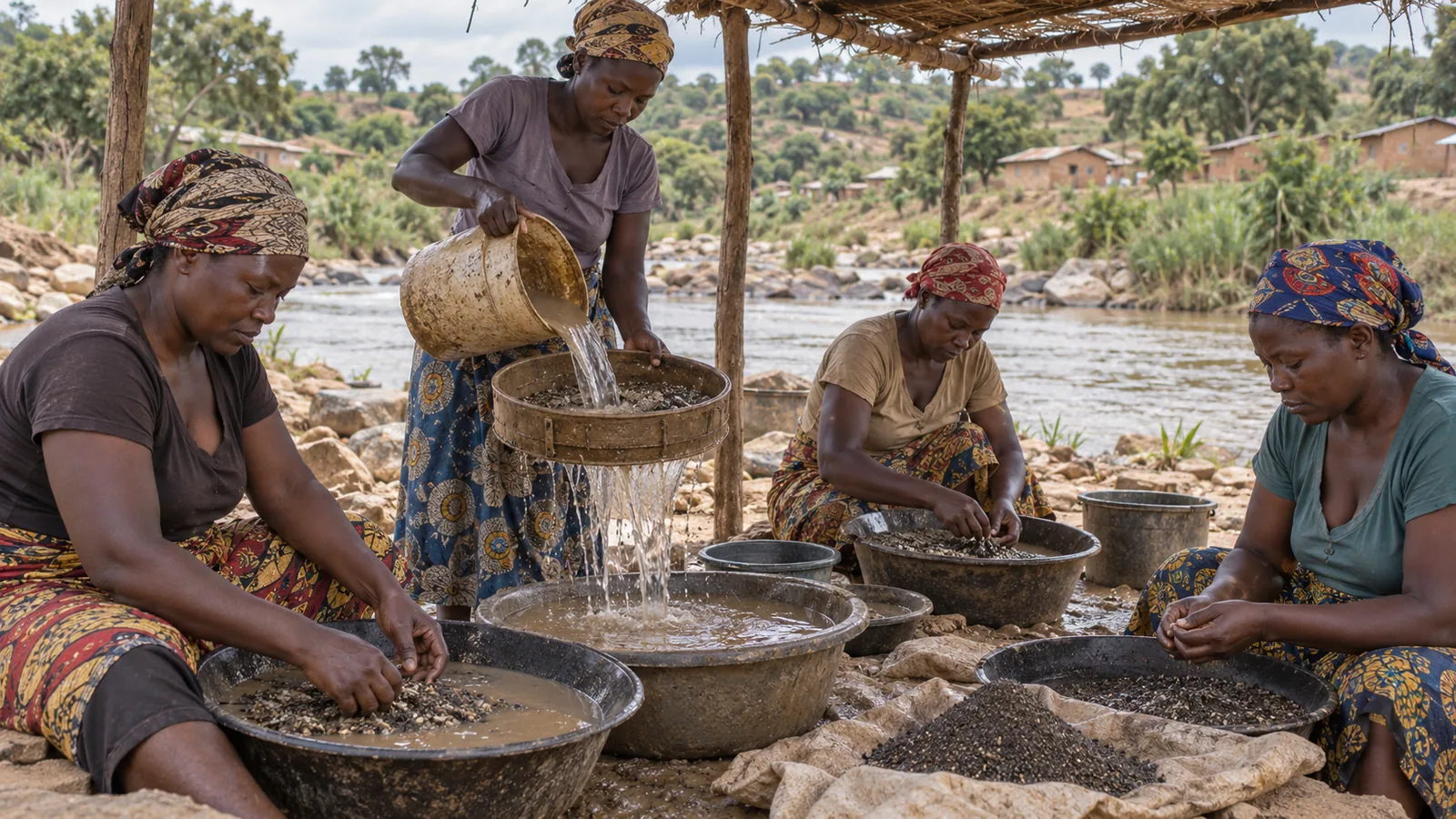
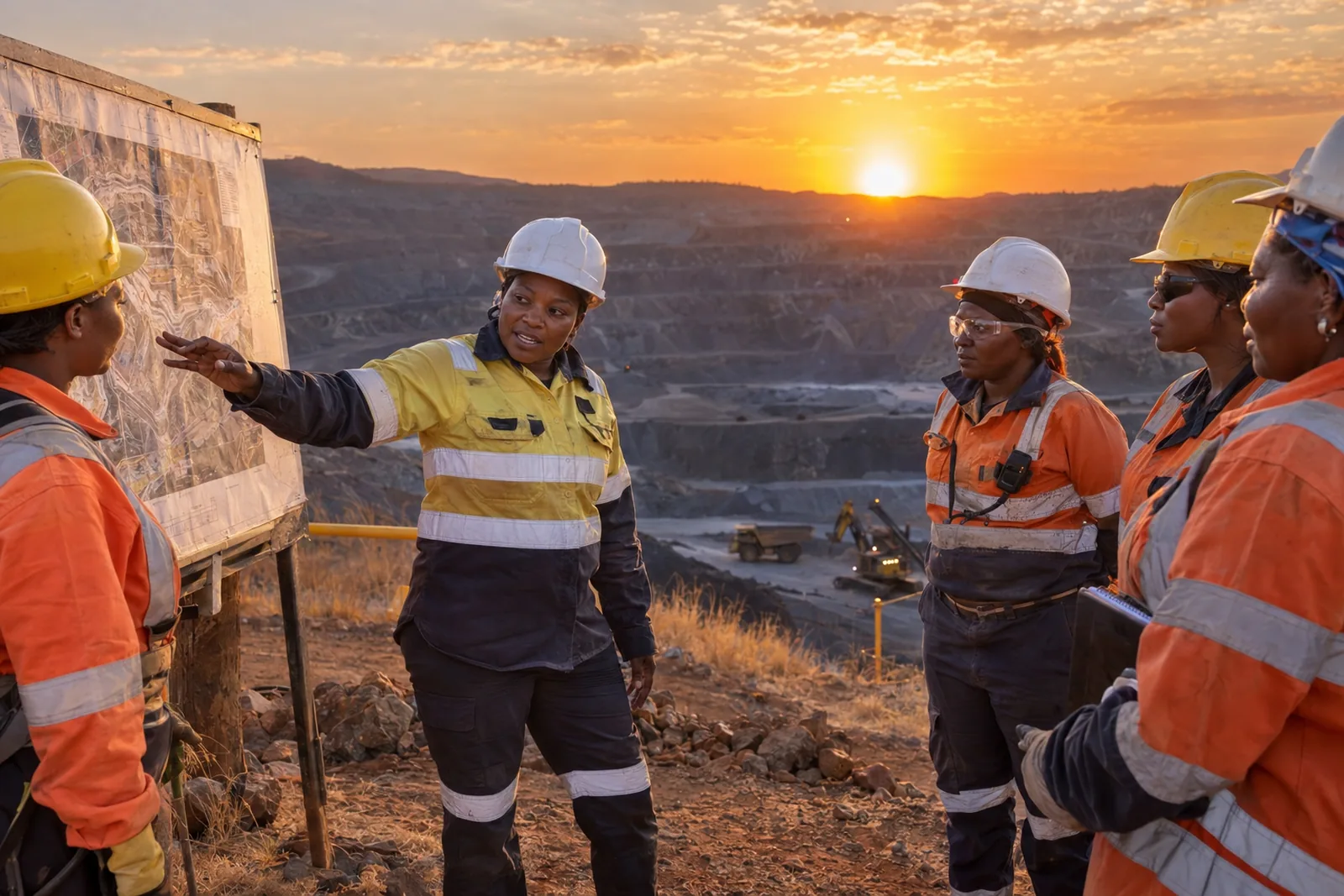
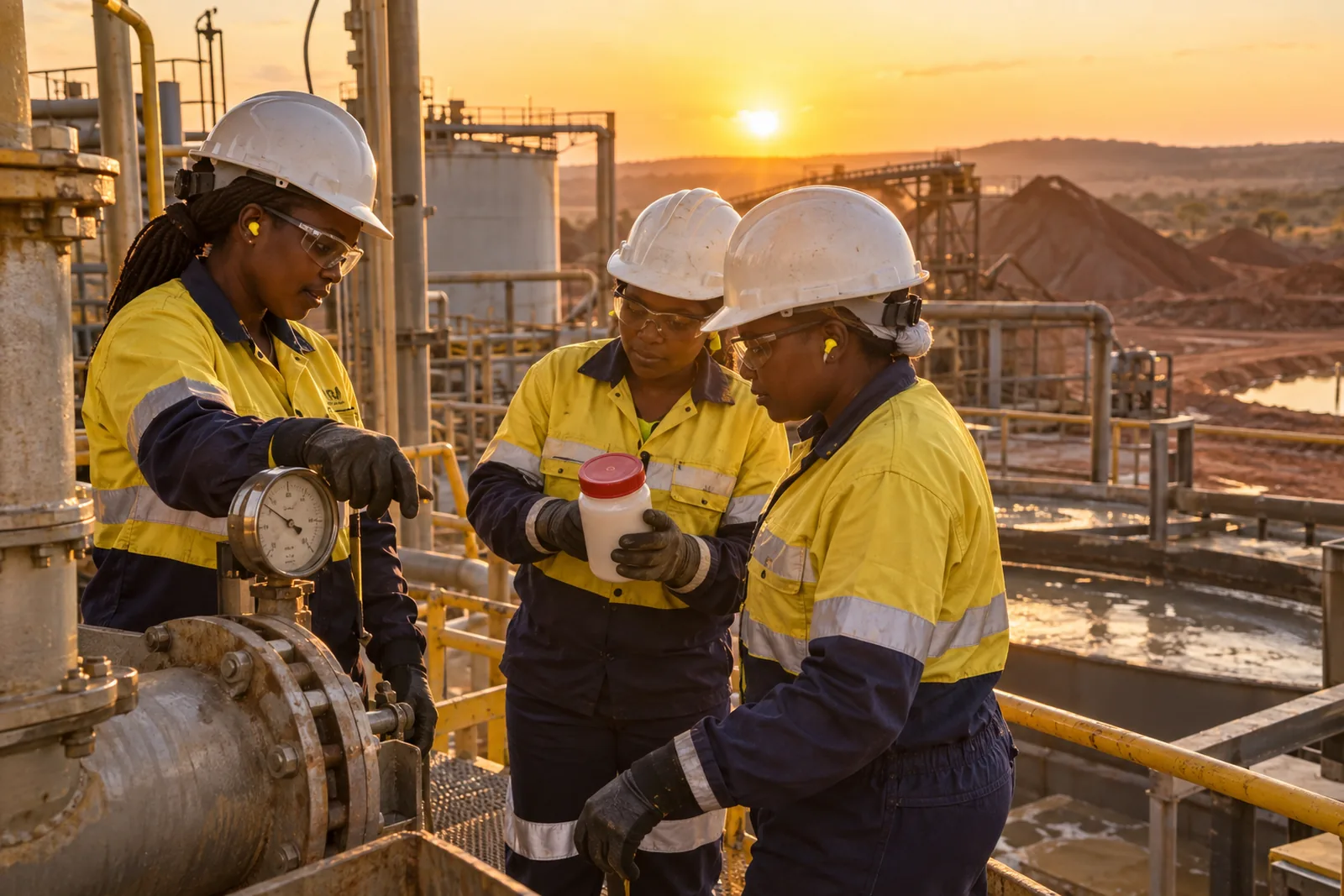
Most of the Zimbabwean figures on this page were collected between 2012 and 2019 and published by the Zimbabwe Gender Commission, Pact and ZELA; the company figures, the Ministry's 10–15% and the policy items are from 2024 to 2026. Where a number is old or comes from one survey in one province, the chart says so. The photographs illustrate the kinds of work described; they are not pictures of the people, mines or places named on this page. Checked 19 September 2026.